Wondering why one Wellesley street feels lined with modest cottages while another opens up to larger homes on deep, landscaped lots? That contrast is part of what makes Wellesley so appealing to buyers who want more than a one-note suburban housing stock. When you understand how the town developed, you can read its homes and neighborhoods more clearly, spot the tradeoffs that matter to you, and narrow your search with more confidence. Let’s dive in.
Why Wellesley Has So Much Variety
Wellesley’s residential character did not appear all at once. The town’s preservation guidelines show that roads, rail access, and trolley connections shaped where and when development happened after Wellesley became an independent town in 1881.
That history helps explain why Wellesley does not look uniform from one area to the next. Instead, you see an older layer of cottages and small houses, later neighborhood growth with revival-style homes, and former estate land that still reads as larger-scale and more open.
Older routes like Washington Street and Worcester Street helped establish early agricultural, village, and estate patterns. By 1897, large tracts along the railroad and Washington Street had already been platted, while other parts of town remained more rural.
Cottage-Scale Homes in Wellesley
Some of Wellesley’s most distinctive older homes appear in areas shaped by early lot divisions and incremental growth. These streets often feel more layered because houses were built, expanded, and adapted over time rather than planned all at once.
Cottage Street’s Early Residential Pattern
The Cottage Street Historic District is one of the clearest examples. According to the town’s guidelines, it includes early and mid-18th-century cottage vernacular homes, high-style Greek Revival residences, workers’ cottages tied to local factories, and later 19th- and early 20th-century houses.
The district began with an 1854 subdivision of 32 small lots, and that pattern still shows up on the street today. The town notes that many of the smaller homes have been expanded over time, which adds to the area’s layered, lived-in character.
What These Homes Often Look Like
In Wellesley’s older cottage areas, you may notice:
- Smaller footprints and tighter spacing between homes
- More varied rooflines and facades from different time periods
- Wood features such as clapboards, shingles, porches, trim, and older windows
- A street pattern that feels compact and incremental rather than highly uniform
For buyers, these homes can offer charm and architectural detail that newer construction may not replicate in the same way. At the same time, older exterior materials often require more regular inspection and repair.
Colonial Revival’s Strong Presence
If there is one style that strongly signals Wellesley’s classic, polished residential look, it is Colonial Revival. The style appears in both individual homes and larger neighborhood patterns across town.
Town records describe the Tufts House as an early and well-preserved Colonial Revival example, with a side-gabled roof, clapboard siding, and a pedimented entry with sidelights. The Fiske House in Wellesley Farms was also transformed from a farmhouse into a more formal Colonial Revival residence.
More recent preservation reports for homes such as 7 Woodcliff Road and 52 Kenilworth Road show many of the same defining features. These include symmetrical facades, classical entries, shutters, and attached garages or breezeways.
Common Colonial Revival Details
When you tour Wellesley homes, Colonial Revival details often include:
- Symmetrical front facades
- Side-gabled or hipped roofs
- Clapboard, brick, or shingle cladding
- Pedimented front entries
- Sidelights and louvered shutters
- Breezeways or attached garages on some later examples
This style tends to feel orderly, traditional, and adaptable. That is one reason it remains a useful reference point for buyers comparing homes across different parts of Wellesley.
Shingle Style, Tudor, and Other Revival Influences
Wellesley’s architecture does not stop at Colonial Revival. The town’s preservation materials also point to Shingle Style and Tudor-era influences that add texture to the local housing mix.
The historic-preservation guidelines identify 6 Cottage Street as a Shingle Style building. In the Kenilworth subdivision within the Dana Hall area, the first phase of development used Colonial and Tudor Revival styles, then later phases added modified Cape Cod, New England Colonial box, and Garrison forms.
This range matters because it shows how Wellesley neighborhoods can share a traditional vocabulary without feeling repetitive. You may see one street where Tudor detailing adds variety, while another leans more heavily toward Colonial symmetry or shingled forms.
How Newer Homes Fit In
Wellesley’s design guidelines encourage compatibility rather than direct imitation. The town notes that many newer homes borrow historic Shingle Style forms and detailing but still read as contemporary because of larger garages and simplified features.
That means a newer house may feel connected to its surroundings without trying to look exactly like an older structure. For buyers, that can be an appealing middle ground between classic neighborhood character and newer construction needs.
From Compact Streets to Estate Settings
Home style in Wellesley is closely tied to lot size, setbacks, and street layout. In practical terms, the same town can offer a compact, cottage-oriented street on one end of the spectrum and a more estate-like setting on the other.
Smaller Lots in Older Areas
Cottage Street remains the clearest example of a compact lot pattern. The district contains 65 properties, and its early subdivision still gives the street a tighter rhythm than larger-lot areas elsewhere in town.
These settings often feel walkable in layout and visually layered because homes sit closer together and many have changed over time. If you like architectural variety and a sense of historical evolution, this pattern may stand out to you.
Larger Lots in Estate Areas
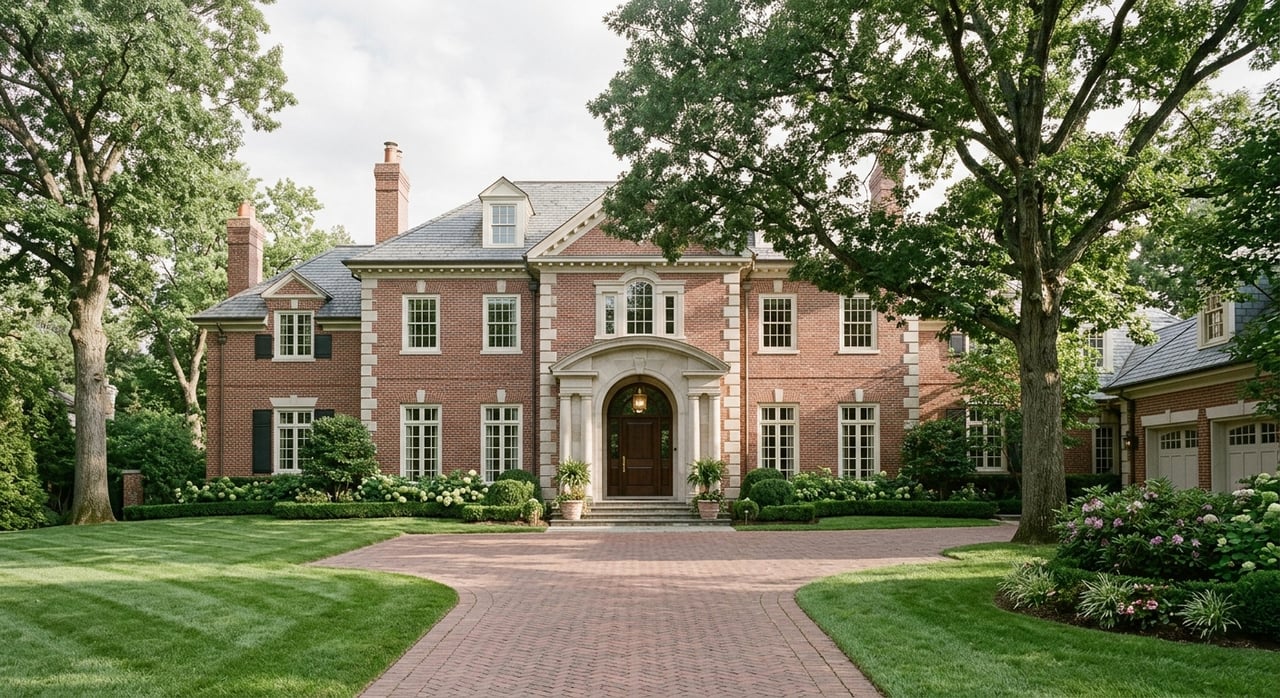
By contrast, Wellesley Farms and Cliff Estates are associated with larger, more private parcels. The town’s reporting on the Fiske House notes a 0.75-acre site with the home set back from the road and service functions placed to the side.
The same material says that earlier large estates around the Fiske homestead helped define the character of Wellesley Farms. In Cliff Estates, development strategy emphasized large lots and rejected smaller, lower-cost housing patterns.
The Dana Hall and Kenilworth area offers another example of this larger-scale approach. Town records say surrounding lots there originally ranged from 35,000 square feet to 14.3 acres, showing how lot size and architectural ambition often moved together.
What Zoning Still Tells You Today
Wellesley’s current zoning still supports relatively low-density residential patterns. In single-residence and general-residence districts, lots generally must contain 10,000, 15,000, 20,000, 30,000, or 40,000 square feet depending on the area regulation district.
Maximum building coverage also changes by lot size. It drops from 25% on lots under 10,000 square feet to 15% on lots of 40,000 square feet or more.
For buyers and sellers, this matters because neighborhood feel is not just historical. It is also reinforced by current rules about spacing, orientation, and yard patterns that shape the streetscape over time.
What Buyers Should Consider
Once you know Wellesley’s housing patterns, your search can become more practical. Style is important, but so are maintenance, renovation plans, and the kind of setting you want day to day.
Older Homes Often Need More Exterior Upkeep
The town’s guidelines note that wood elements such as clapboards, shingles, porches, columns, trim, windows, and doors are important character-defining features in older neighborhoods. They also note that regular inspection and prompt repair matter because wood deterioration can accelerate without routine maintenance.
If you are drawn to cottages or older Colonial-era homes, it helps to budget for that ongoing care. The appeal is real, but so is the responsibility that comes with preserving exterior materials.
Renovation Rules Can Affect Your Plans
Wellesley approved its Historic Preservation Design Guidelines in 2021, and the Historic District Commission uses them as a reference for older residences in historic districts and elsewhere in town. In local historic districts, the commission reviews exterior architectural features, while interior changes and renovations do not require HDC review.
That distinction is useful if you are comparing homes with different renovation potential. A house may offer flexibility inside while requiring more careful planning for exterior changes.
Lot Size Shapes Daily Living
In broad terms, Wellesley’s compact older streets tend to feel more renovation-heavy and incremental. Larger-lot districts often feel more private, more landscaped, and more estate-like.
Neither is automatically better. It depends on whether you want a smaller-scale historic street presence, a more formal setting with deeper setbacks, or something in between.
How to Read a Wellesley Home Quickly
If you are touring homes and want a fast way to interpret what you are seeing, focus on three things first: house style, lot pattern, and relationship to the street. Those clues usually tell you a lot about the home’s era, upkeep needs, and neighborhood feel.
A practical checklist can help:
- Facade: Is it symmetrical and formal, or more modest and varied?
- Roofline: Side-gabled, hipped, or more irregular?
- Materials: Clapboard, shingles, or brick?
- Entry: Simple front door or pedimented entry with sidelights?
- Lot setting: Tight to the street or set back on a deeper parcel?
- Garage placement: Attached, breezeway-connected, side-sited, or less prominent?
These details can help you tell whether a home fits the cottage-to-estate spectrum that defines so much of Wellesley’s visual identity.
If you are weighing a move to Wellesley, it helps to look beyond square footage and bedroom count. The right fit often comes down to how you want a home to live, age, and sit within its street setting. If you want help comparing Wellesley home styles, evaluating resale potential, or understanding how one neighborhood pattern may suit your goals better than another, connect with Steph Crawford Group.
FAQs
What are the most common home styles in Wellesley?
- Wellesley includes early cottage vernacular homes, Greek Revival houses, Colonial Revival homes, Shingle Style examples, Tudor Revival homes, and later modified Cape Cod, New England Colonial box, and Garrison forms.
What makes Cottage Street in Wellesley unique?
- Cottage Street stands out for its 1854 subdivision pattern of small lots and its mix of cottage vernacular, Greek Revival, workers’ cottages, and later homes that create a layered historic streetscape.
What defines Colonial Revival homes in Wellesley?
- Colonial Revival homes in Wellesley often feature symmetrical facades, side-gabled or hipped roofs, clapboard or brick exteriors, pedimented entries, sidelights, shutters, and sometimes attached garages or breezeways.
How do lot sizes vary across Wellesley neighborhoods?
- Older areas like Cottage Street tend to have smaller, tighter lot patterns, while areas such as Wellesley Farms, Cliff Estates, and parts of Dana Hall and Kenilworth are associated with larger parcels and deeper setbacks.
What should buyers know about renovating older Wellesley homes?
- In local historic districts, Wellesley’s Historic District Commission reviews exterior architectural features, while interior renovations do not require HDC review.
Why do some Wellesley neighborhoods feel more estate-like?
- Larger lot sizes, greater setbacks, more landscaped grounds, and development patterns tied to former estate land give some Wellesley neighborhoods a more private and estate-oriented feel.